

Facilities Management (FM) is a professional discipline focused on the efficient and effective delivery of support services for the organizations that it serves. It involves the strategic management and maintenance of an organization’s physical assets to ensure a safe and productive environment.
Based on professional standards in the industry, the core components of facilities management include:
Emergency Response: Overseeing the management of facility-related emergencies to handle issues promptly and effectively.
Operational Policy & Procedures: Developing and implementing frameworks that ensure the efficient operation of all physical assets.
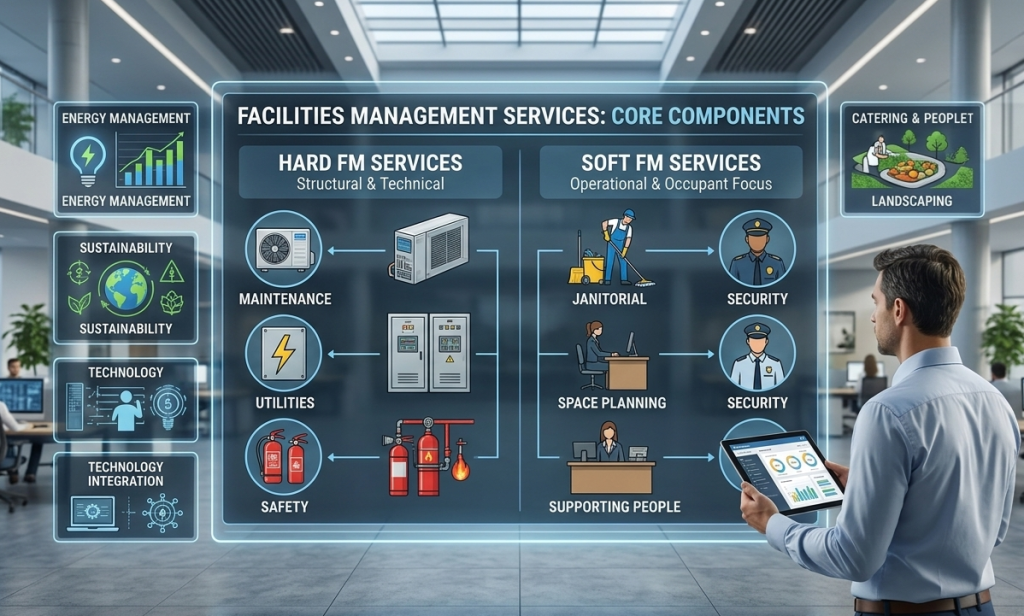
Maintenance & Technical Oversight: Managing MEP (Mechanical, Electrical, and Plumbing) systems, including regular inspections, audits, and repairs for items such as air conditioners, elevators, and substations.
Health, Safety, and Environment (HSE): Ensuring full compliance with safety regulations, fire prevention protocols, and environmental standards.
Financial Management: Handling budgets for maintenance expenses, optimizing capital expenditure (CAPEX) projects, and ensuring overall cost-effectiveness.
Soft Services Management: Planning and directing central services such as security, professional cleaning, gardening, waste disposal, and parking.
Vendor & Contractor Relations: Negotiating with vendors, managing work orders, and coordinating with third-party service providers to maintain high property standards.
Emergency Response: Overseeing the management of facility-related emergencies to handle issues promptly and effectively.
By Kamal Biswas
engrmkh@gmail.com
Very effective information. Thank you for your written.